
When you’re planning a new home or renovating an existing one, the door you choose usually gets less thought than it deserves. It’s not just an entry point — it affects how the house looks, how secure it is, and how much you spend cooling or heating the space around it. Aluminium doors have earned a solid reputation among Indian homeowners for exactly this reason: they combine durability, a modern look, and genuine performance in a way few other materials manage together, especially given the range of climates across the country. The appeal comes down to strength, weather resistance, and design flexibility. Established manufacturers such as APL Apollo Doors and Windows have built their product ranges around this shift, offering systems suited to both everyday residential entrances and larger architectural openings. This guide walks through what actually matters when choosing one for your home.
The Different Types of Aluminium Doors
Aluminium doors aren’t a single product — they come in several distinct styles, and which one makes sense depends on the opening you’re working with, what you need it to do, and the look you’re going for.
Hinged entrance doors are the standard choice for front and back entrances — reliable, secure, and a big contributor to how a house looks from the street. A rigid frame with solid lock points makes these a genuinely secure option, and because aluminium is so strong, these doors can be built taller and wider than a timber equivalent without sagging over time.
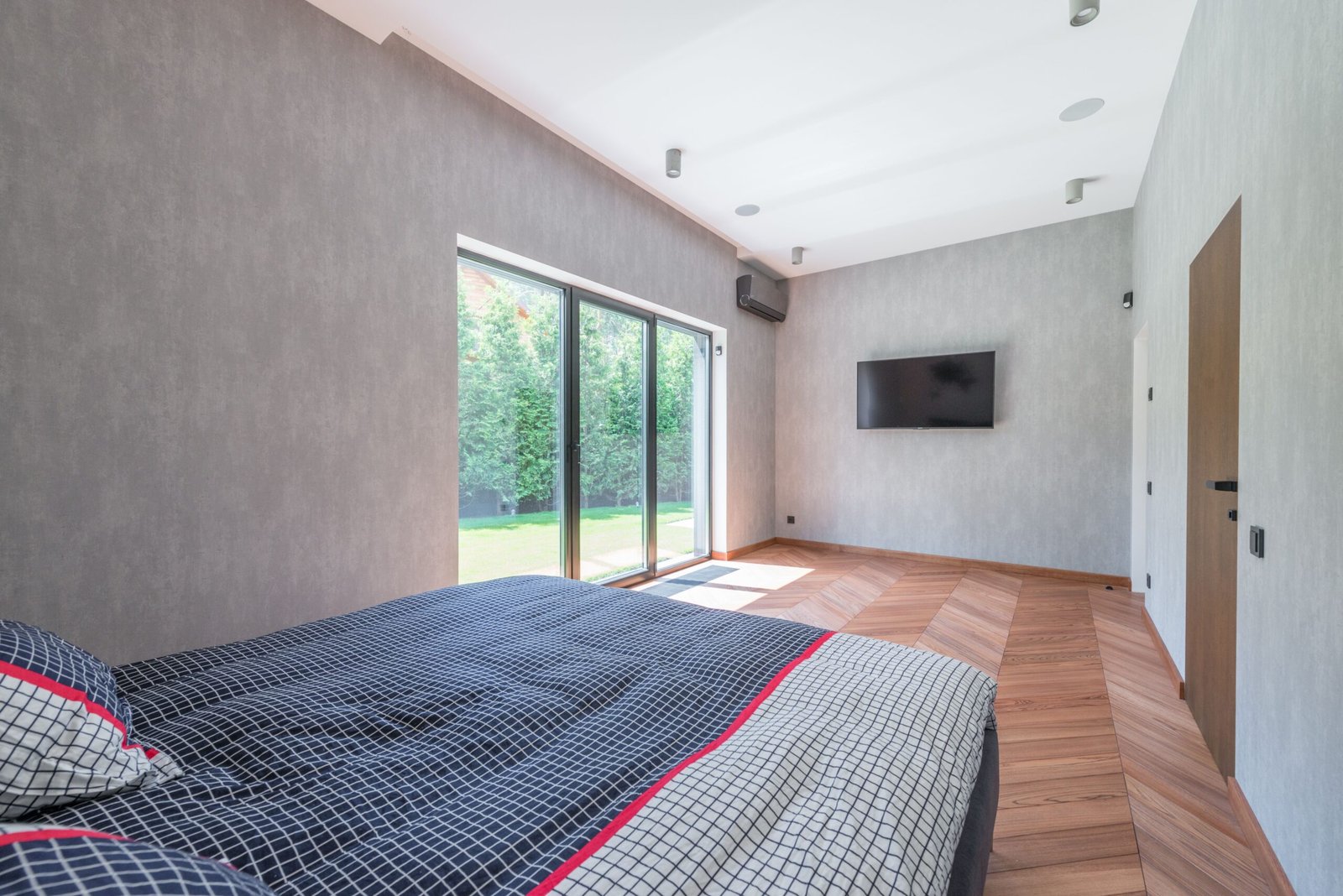
Sliding and stacker doors work well for connecting indoor living space to a balcony, terrace or garden — a common requirement in apartments and independent houses alike. They maximise glass area and don’t need swing clearance, which makes them a good fit where floor space is tight, as it often is in Indian apartments. The trade-off is that the tracks need regular upkeep to keep running smoothly, especially where dust is a factor.
Security doors and screens add a layer of protection that lets you keep a door open for ventilation while still having something locked between you and the outside — useful in ground-floor homes and ones facing the street. In coastal cities like Mumbai, Chennai or Kochi, go for marine-grade or stainless mesh — anything else corrodes fast in salt-laden air. A perforated aluminium sheet is worth considering too, since it looks more solid while still letting air through.
Double and French doors suit wider openings and give full-width access with a classic look — two leaves meeting in the middle rather than one large panel. These work well for larger living rooms or main entrances where you want a more traditional appearance.
Folding doors offer the most openness of any style, which is why you see them in resorts, restaurants, and homes going for a premium, open-plan feel. That open, airy result comes at a price though — they’re on the more expensive end, and they need good-quality tracks to keep moving smoothly.
| Door type | Best for | Key strength | Watch for | Price range |
| Entrance (hinged) | Front and back of house | Security and kerb appeal | Needs swing clearance | Low |
| Sliding and stacker | Balconies, terraces, indoor-outdoor flow | Maximum glass, no swing space | Track maintenance | Moderate |
| Security door & screen | Ventilation with locked airflow | Airflow plus a physical barrier | Mesh grade matters | Add-on cost |
| Double and French | Wide openings, classic look | Full-width access | Two leaves to seal | Moderate |
| Folding | Resorts, restaurants, wide spaces | Maximum openness | Requires quality tracks | Higher |
What to Actually Look At Before Choosing
Picking an aluminium door is more than picking a style off a brochure. A few things genuinely change how well the door performs once it’s installed — and in Indian conditions, some of these matter more than others.
Opening and clearance. Measure the rough opening first and work out whether there’s room for a door to swing open. If there isn’t — common in compact apartment layouts — sliding is probably your answer.
Exposure. A door facing intense sun, coastal salt air, or heavy monsoon rain needs a higher-grade finish and better seals than one tucked away and sheltered. Don’t spec an internal-grade door for a west-facing exterior opening that takes the full brunt of summer heat.
Security level. Anything street-facing or on the ground floor should have a multi-point locking system and ideally a security screen or grille. Upstairs or internal doors can usually get away with simpler hardware.
Glass versus privacy. Decide how much natural light you want against how much privacy you need — that choice steers you toward a solid leaf, a honeycomb panel, or a fully glazed one. For anything exterior, toughened safety glass isn’t optional; it’s the sensible baseline, particularly given India’s variable construction-site conditions and the risk of impact.
Finish. Colour is mostly personal preference, but darker tones hide dust and everyday wear better, while lighter colours reflect more heat rather than absorbing it — a real consideration in most Indian climates. Whatever you pick, confirm it’s actually rated for exterior use, since not every powder-coat finish holds up to direct sun and monsoon cycles year after year.
Frame thickness and quality. A properly thick aluminium frame holds its shape and resists bending under load. Thinner, cheaper frames can deform over time, especially on larger sliding doors carrying heavy glass panels.
Track system and hardware. For sliding and folding doors, the rollers and tracks do most of the work — cheap ones will show it within a year or two, particularly with dust ingress, which is a bigger issue in most Indian cities than in cooler, wetter climates. Hinges, handles and locks need to be built to actually carry the door’s weight, not just look the part.
Glass and Thermal Performance
A good-looking aluminium door isn’t automatically a well-performing one. Two things do most of the work here: the glass and whether the frame is thermally broken.
On glass — 6 to 10 mm is the standard range. Small interior panels can get away with 6 mm; anything medium to large, or facing outside, should be 8 to 10 mm. Given India’s climate extremes, toughened safety glass is worth the extra cost on most exterior applications. Double glazing has become more common on premium aluminium doors, particularly in newer residential projects in metros, though it’s still treated more as an upgrade than a default here compared to colder-climate markets.
Read More: Choosing a 5000W Power Station for Home Renovation and Backup Power
On thermal breaks — this matters differently in India than in colder countries, but it’s still relevant, especially for homes that run air conditioning for much of the year. A thermal break is a strip of low-conductivity material inserted between the interior and exterior aluminium profiles, stopping heat from transferring directly through the metal. Without one, aluminium — being a strong conductor — lets outdoor heat pour straight into an air-conditioned room, forcing your AC to work harder and pushing up your electricity bill.
For large glazed openings connecting an air-conditioned interior to a hot exterior — a common scenario in Delhi-NCR, Mumbai, Hyderabad, and other major Indian cities during peak summer — a thermally broken system is genuinely worth the added cost. It also helps with the opposite problem during Delhi’s cold winter mornings, keeping conditioned air in rather than losing it through the frame. For simpler interior applications, or doors that aren’t separating conditioned space from the outdoors, a standard non-thermal-break profile is usually adequate and more economical.
Security: What Actually Matters
Security is usually the first practical question homeowners ask, and aluminium holds up well here. It’s naturally strong and rigid, which makes it more resistant to forced entry than more flexible materials like uPVC.
The real upgrade is a multi-point locking system — securing the door at several points along the frame rather than just one, which adds real resistance against anyone trying to force it. For a street-facing or ground-floor door, the locking hardware matters more than the finish; a solid multi-point lock and a decent cylinder will do more for you than any cosmetic feature. If you’re adding a security screen or grille, pair it with a proper deadlock rather than a basic latch — a screen with a flimsy lock is really just a visual deterrent, not an actual barrier.
Read More: The Land Development Journey: From Raw Block to Subdivided, Sellable Lots
When comparing systems, ask manufacturers whether their locking hardware and glazing have been tested for impact and security performance, and ask for documentation rather than just taking a sales pitch at face value. Combined with toughened safety glass, a well-specified aluminium door can be a genuine deterrent without looking like a fortress.
What Aluminium Doors Cost in India
Price varies a lot depending on size, glass type, hardware, finish, and whether the profile is thermally broken. Aluminium generally costs more upfront than basic uPVC, but the long-term picture tends to favour it, particularly for larger openings and exterior applications.
As a rough guide, a standard hinged aluminium entrance door for residential use typically starts at the lower end of the aluminium price range, with costs generally running from around ₹450 to ₹1,200 per sq. ft. for standard systems. Premium, thermally broken systems with higher-specification glass can run anywhere from ₹1,500 to ₹4,000 per sq. ft. or more, depending on the city, profile brand, and glazing chosen. Large glazed sliding or stacker doors cost more simply because of the glass area involved, and security screens or grilles are typically priced as an add-on rather than a full door replacement.
These figures vary meaningfully by region — pricing in a metro like Mumbai or Delhi will differ from a Tier 2 city, and local manufacturer overheads, transport, and installation complexity all play a part. Treat any published range as a starting reference point rather than a quote, and always get a project-specific estimate based on your actual opening dimensions and specification.
On long-term value — aluminium doors typically last well beyond uPVC in demanding conditions, particularly where UV exposure and heat are significant factors, since aluminium doesn’t degrade or discolour under sun exposure the way some plastics can. Spread over the life of the door, the higher upfront cost is often offset by lower maintenance and fewer replacements, especially for exterior and heavily used openings.
| Door type | Typical use case | Relative maintenance | Typical lifespan |
| Aluminium (standard) | Interior, semi-exterior, moderate exposure | Low | Long |
| Aluminium (thermally broken) | Exterior, AC-connected openings | Low | Long |
| uPVC (standard) | Interior, budget exterior | Low | Moderate |
| Wood | Interior, traditional design | Higher | Varies with maintenance |
Bespoke sizes, colours and hardware upgrades — multi-point locks, premium glass, thermal breaks — all push the price up. The most reliable way to get an accurate number is a measured quote for your specific opening, since even small changes in width or a switch to thermally broken glass can shift the figure meaningfully.
Choosing a Manufacturer in Your Region
Specifications that work well in one part of India don’t necessarily transfer to another — a profile and seal combination suited to Delhi’s dry heat and dusty winters performs differently from one suited to Mumbai’s humidity and monsoon intensity, or Pune’s more moderate but still variable climate. This is why it’s worth choosing a manufacturer who understands local conditions rather than one working purely off a generic national catalogue.
If you’re searching for aluminium door and windows manufacturers in Maharashtra, look for a supplier who can speak specifically to the state’s mix of coastal humidity along the western belt, heavy monsoon rainfall, and hot, dry conditions further inland — all of which affect seal quality, finish rating, and whether a thermal break is worth the added cost for your particular opening.
The same applies at a city level. Anyone searching for aluminium door and windows manufacturers in Pune should ask suppliers directly about profile options suited to Pune’s seasonal range — a relatively mild winter followed by a hot, dry period before the monsoon — since that swing puts real demands on seals and finishes over the life of the door.
APL Apollo Doors and Windows is one of the manufacturers with a presence across these markets, and companies like it are generally better placed to advise on regional specification than a supplier with no local project history in your city. Whichever manufacturer you’re evaluating, the same due diligence applies: ask about profile quality, alloy grade, hardware brands, glazing options, and whether they can show completed local projects rather than just catalogue renders or showroom samples.
Making the Decision
An aluminium door is a meaningful investment, and in India’s varied climate — from coastal humidity to inland heat to Delhi’s winter-summer extremes — getting the specification right matters more than in more climatically uniform markets. Factor in exposure, security needs, whether a thermal break makes sense for your opening, and glass quality, and the right choice usually comes down to matching the door to how it’ll actually be used and where it sits in your home.
Manufacturers like APL Apollo Doors and Windows are a reasonable starting point when comparing suppliers, but the same checks apply no matter who you’re evaluating: ask about profile quality, hardware, regional project experience, and get a proper measured quote before committing. Prices and requirements shift more than people expect based on local conditions and the specifics of your opening, so a generic estimate rarely holds up once someone has actually assessed the space.
Frequently Asked Questions
Are aluminium doors good for keeping homes cool in Indian summers?
Yes, particularly thermally broken systems paired with good glazing. A thermal break stops outdoor heat transferring through the frame into an air-conditioned interior, which reduces the load on your AC and helps keep energy bills in check during peak summer months.
How long do aluminium doors last in Indian conditions?
With a well-specified profile, proper installation, and reasonable maintenance, aluminium doors typically last several decades. They resist the corrosion, swelling and UV degradation issues that affect other materials under continuous sun exposure and monsoon humidity.
Are aluminium doors secure enough for ground-floor and street-facing homes?
Yes, when specified correctly. Aluminium is naturally rigid, and paired with multi-point locking systems and toughened safety glass, it provides strong resistance to forced entry.
Do aluminium doors need much maintenance in dusty or humid Indian cities?
Relatively little compared to timber. Regular cleaning, clearing dust from sliding tracks, and periodic checks on seals and hardware are usually enough to keep the door performing well.
Can I get custom sizes, colours and thermal-break options?
Yes — most established Indian manufacturers offer bespoke sizing, a wide range of powder-coated finishes, and thermally broken profiles as an option. Custom specifications typically cost more than standard stock sizes.
Is a thermal break necessary for every aluminium door in India?
No, It’s most valuable for large exterior openings connected to air-conditioned rooms, particularly in hot cities or homes running AC extensively. For interior doors or less demanding applications, a standard non-thermal-break profile is often sufficient and more cost-effective.
